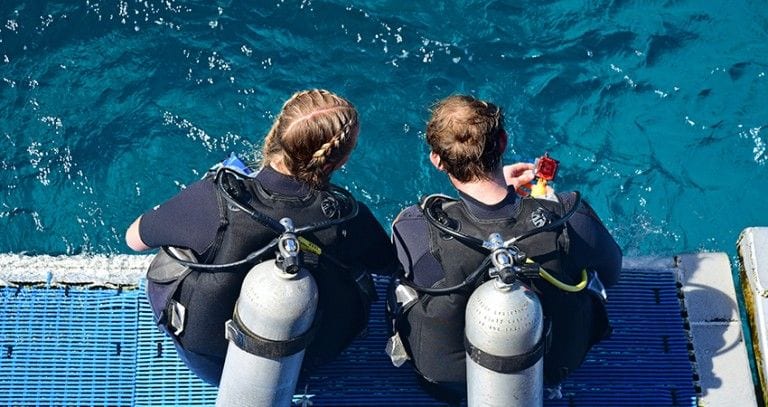
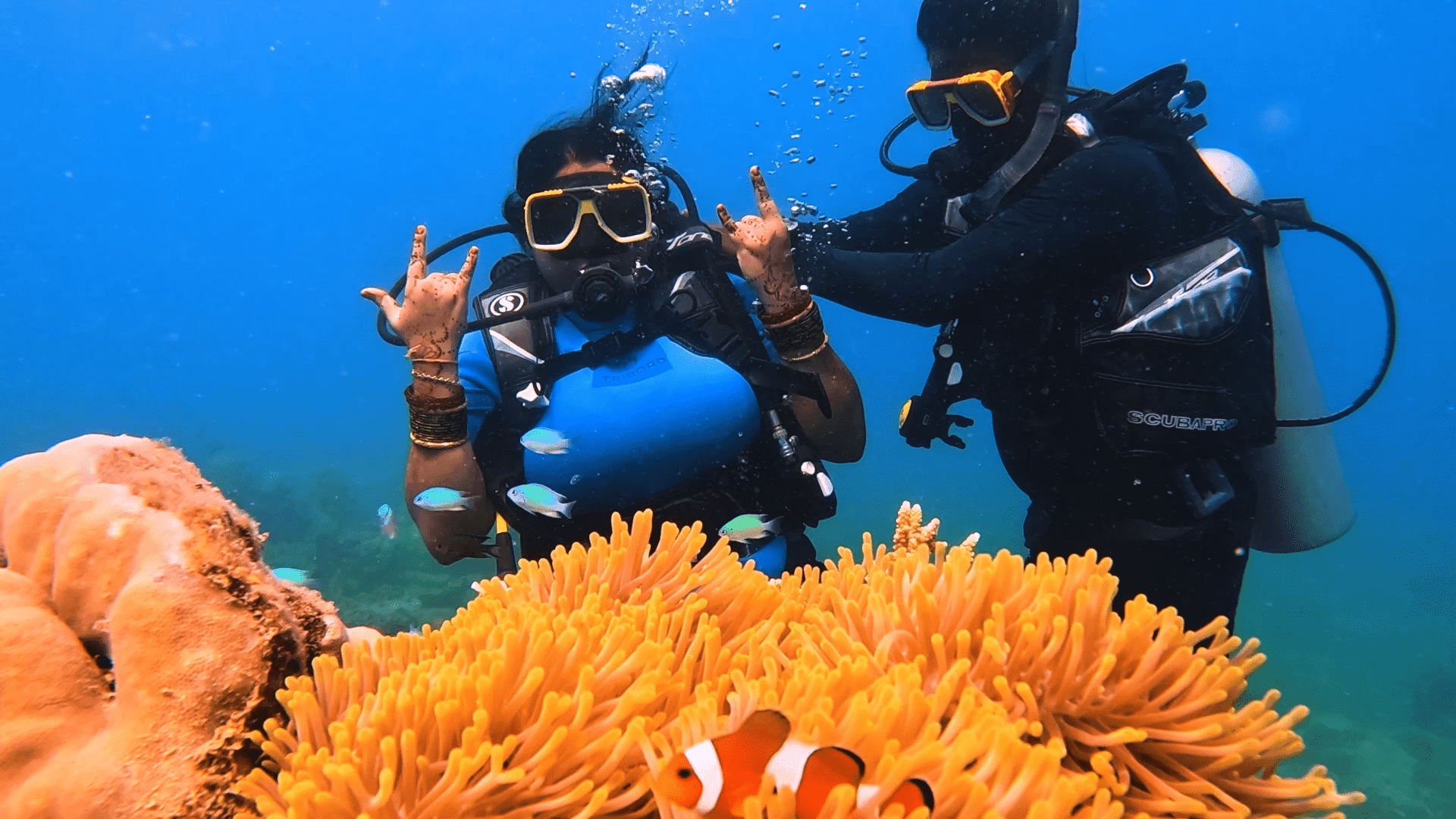
Scuba diving underwater is one of the best experiences you can have. Seeing beautiful coral reefs, exotic sea creatures, and stunning underwater scenery is a highlight. However, in order to dive safely, it is important to know about the conditions and to master the necessary skills, understand how to control one’s buoyancy and to comply with the existing rules and regulations on diving. This means that the best way of acquiring diving knowledge is to attend a diving school where one can get the necessary skills and knowledge.
The beautiful Andaman Islands offer the perfect location to learn basic diving skills. With stunning tropical waters and an abundance of marine life, this is ideal for beginners or those who have already obtained their basic certification. Aqua Nomad offers a wide range of courses to learn to dive which follow the PADI syllabus. We offer courses such as PADI Open Water Diver, PADI Advanced Open Water Diver, PADI Emergency First Response (EFR) and PADI Rescue Diver Course.
The choice of the right diving course depends on your diving experience, your certification level, your preferences, your swimming skills, your objectives, and so on. While there are diving courses devoted to the basic theory of diving, there are also those for qualified divers who want to learn certain underwater navigation methods, ways of maintaining balance while scuba diving underwater, deep diving techniques, and emergency reactions.
The article is aimed at informing potential candidates about diving courses available in the Andaman Islands. It contains all the necessary information about PADI certification, kinds of courses available, eligibility of candidates, required scuba diving equipment, safety recommendations, length of the course, and price of the program.
What Are Scuba Diving Courses?
Scuba diving courses are structured and provide you with knowledge on how to dive underwater using specialist breathing equipment. You will receive both theoretical and practical training to understand the equipment you will be using, as well as supervised training to actually dive underwater.
You will receive varied training to help you understand how to use the scuba diving equipment, understand underwater pressure, keep yourself afloat and communicate with your buddy. You will also learn essential safety techniques, navigation and how to handle various situations underwater.
To ensure students are up to standard, there are guidelines in place set by professional diving organisations. One of these organisations is PADI (Professional Association of Diving Instructors). They provide structured courses to help improve your scuba diving skills.
Aqua Nomad provide various PADI courses to suit you based on your current experience and certification. This includes beginner courses, advanced recreational diving courses and emergency first aid and rescue courses. These courses will help you to improve your diving practices, build your confidence and make you more decisive.
Benefits of Scuba Diving Certification
Learn what equipment you need to use such as tanks, regulators, masks, fins and buoyancy equipment.
Increase confidence in the water and learn how to breathe correctly.
Have knowledge of how to plan dives, look after air supply, communicate with other divers and surface.
You learn how to use buoyancy so you can stay at a certain depth without harming the marine ecology.
Go diving anywhere in the world if you have a valid accreditation.
Choosing the Correct Scuba Course
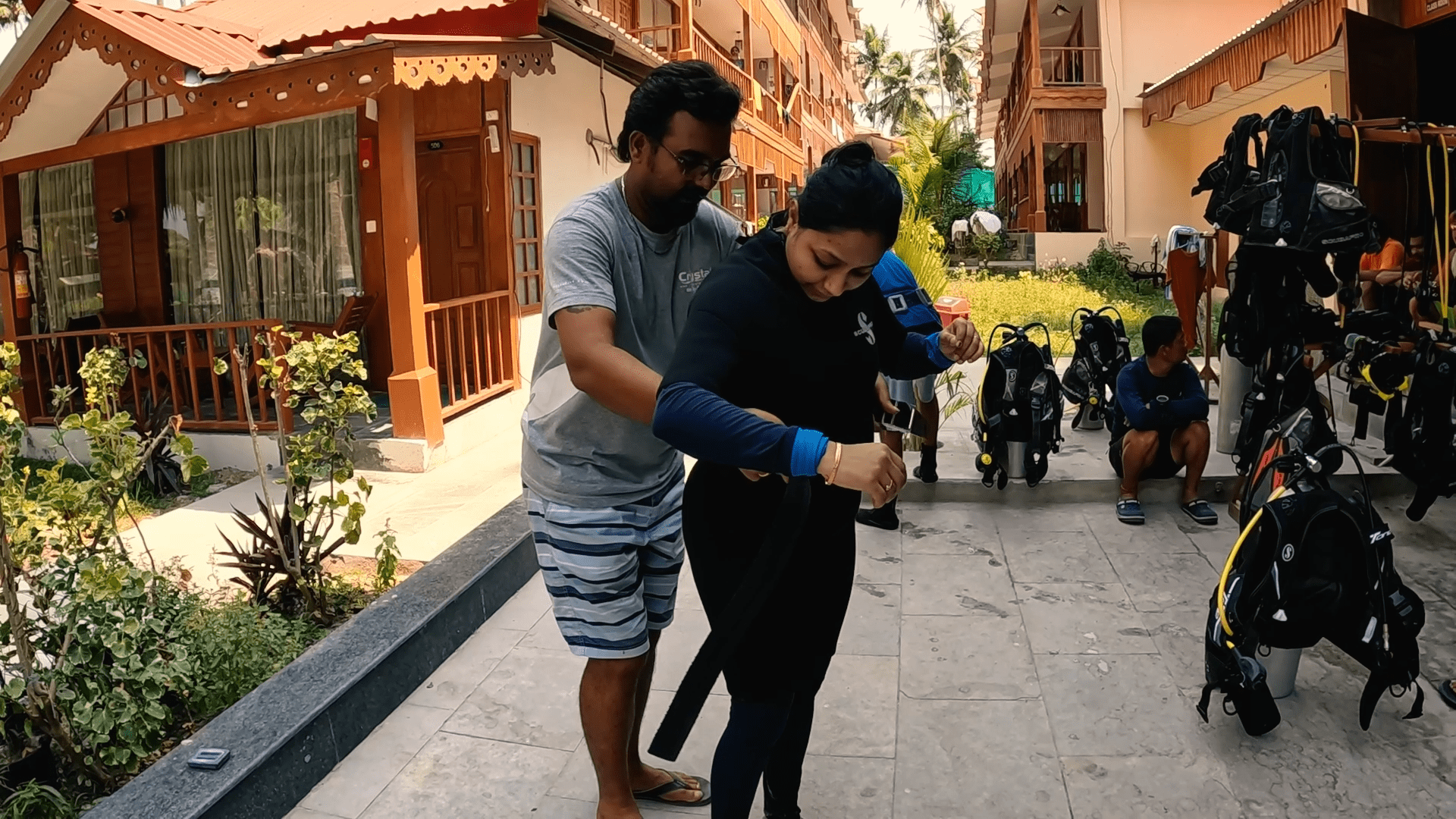
It is very important to choose the correct scuba course. There are a variety of courses available to fit your skill set. Just because you can do advanced dives doesn’t mean you should. If you are a beginner don’t sign up for any advanced courses. More experienced divers will take more courses to improve their skills such as rescue, buoyancy and navigation. The course you take will depend on the certification you currently have.
PADI Open Water Diver
If you’re a beginner, it’s best to take the PADI Open Water Diver Course. This will allow you to learn the basics of scuba diving and improve.
Advanced Open Water
If you have the Open Water Diver certificate (or equivalent) then you should take the Advanced Open Water course. This will help give you more experience with other types of diving. The course is to help improve your navigation, buoyancy and deep diving skills.
Emergency First Response
This course will teach you how to deal with various emergencies. It is not only useful for divers but provides you with useful knowledge for many things.
Eligibility Criteria for Scuba Diving Courses
The eligibility criteria will depend on the training programme you are taking part in, the level of certification you want to gain, age, medical requirements and your ability in water. Although you do not need any previous scuba diving experience to take a beginners’ class, you must be able to swim and meet some health criteria. Finally, prior to enrolling in a particular course, one must be aware of the important factors mentioned above.
1. Minimum Age
The Aqua Nomad course details mention that the minimum age required for participation in the Open Water Diver course is 10 years. Junior divers are expected to follow age-based regulations for certification, supervision, and depth. The specifications for the Advanced Open Water courses indicate the minimum age should be 12 years. Candidates must check the eligibility criteria before registration in the desired course.
2. Swimming Skills
Swimming skills are an incredibly important factor when doing scuba diving. In order to receive your Open Water Diver certification, you will need to be able to swim 200 m unaided or 300 m using your mask, snorkel and fins. You will also need to be able to float on the surface for 10 minutes. The specifics of the course will ensure that those who aren’t great swimmers are still safe. However, if you aren’t a great swimmer, please do get in touch with our Aqua Nomad team to discuss further.
3. Medical Conditions
Before entering the water, you will need to fill out the relevant diving medical form. Some medical conditions and answers will need to be cleared by a qualified medical professional. This is important to keep everyone safe whilst diving. Underwater pressure, breathing apparatus and physical exertion can create additional factors for those with specific medical conditions. Please always be honest about your medical conditions and take the correct medical advice.
4. Previous Certifications
There is no requirement for previous scuba diving certifications for the Open Water Diver Course. If you wish to join the Advanced Open Water course, you will be required to have an Open Water Diver certification or equivalent. Rescue Divers and other advanced courses will have their own requirements, which should be checked with your dive school.
5. Willingness to Follow Instructions
Diving requires some discipline. As a Scuba Diver, you will need to be willing to follow your instructor's instructions, listen to the safety briefings and practise the required skills. You should stay within your limits.
Why The Andaman Islands Are The Perfect Place For A Scuba Diving Course?
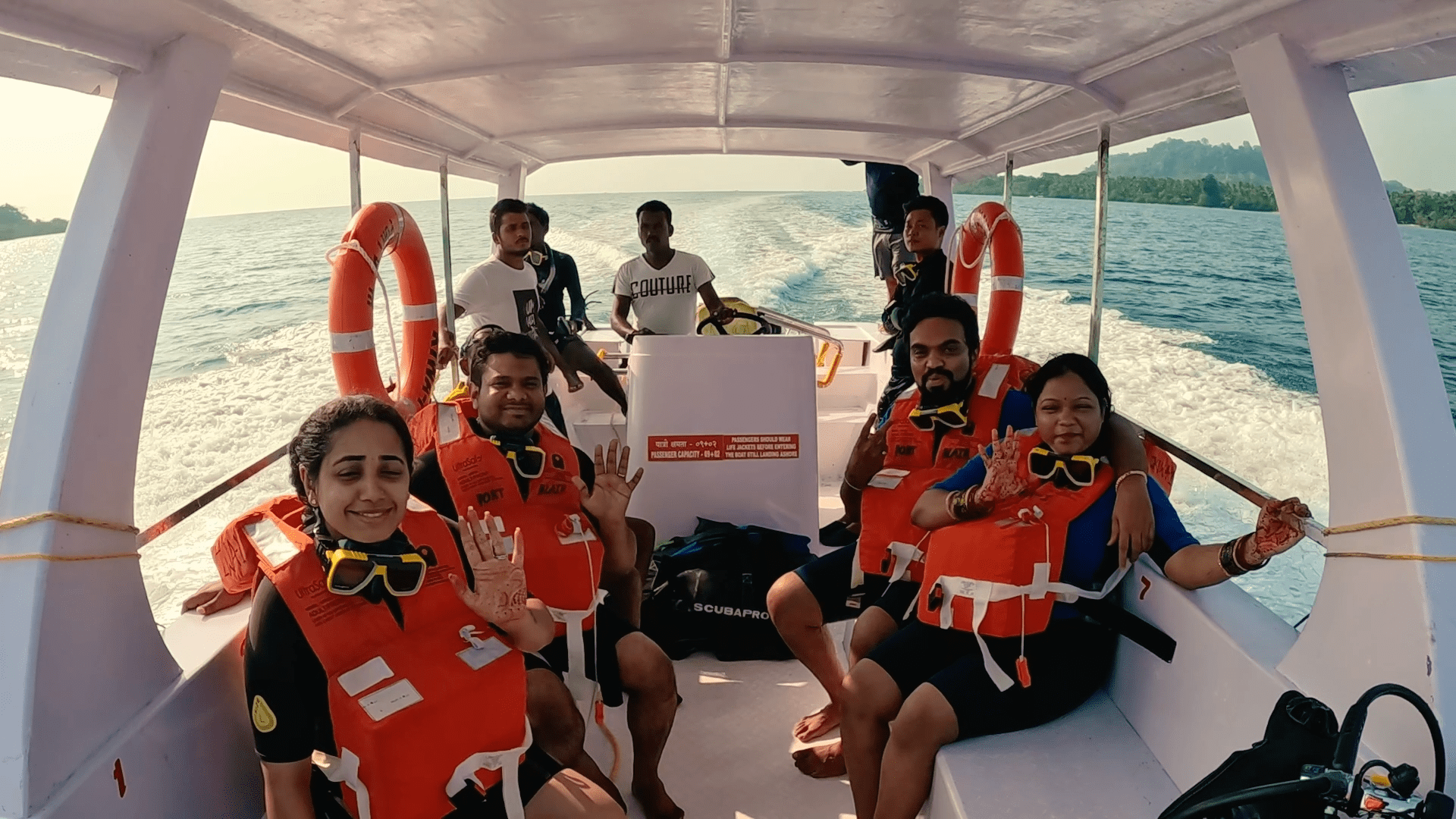
If you want to experience the beauty and excitement of diving, the Andaman Islands are the perfect place. The Andaman Islands are famous for their beautiful marine life and corals. They offer a variety of diving activities. For scuba diving students, the islands are the place where they can combine a diving course with an island holiday.
1. Beautiful Marine Water Environments
Diving in the Andaman Islands allows you to explore coral structures and a variety of underwater life. Underwater visibility depends on location, season, and weather conditions.
2. Different Dive Sites
There are a variety of dive sites. Aqua Nomad lists several sites for training, including Nemo Reef, Tribe Gate, Red Pillar, Purple Haze, Pilot Reef and The Slope for your Open Water course. Advanced training can take place at sites such as Dixon Pinnacle, Jackson Bar, The Wall and Aquarium. However, depending on your course dates and instructor and sea conditions will dictate where training occurs.
3. Suitable for Beginners
The Andaman Islands are great for those wanting to start learning about scuba diving. Beginner courses include theory and practical sessions with instructors.
4. Advanced Training
If you already have an entry-level certification, then there are options to further your training, such as Advanced Open Water and Rescue Diver. Eligible divers can further their knowledge of underwater environments.
5. Full Island Break
There is much more to do here aside from diving. You can enjoy beach activities, sightseeing, and island exploring. This makes the Andaman Islands a great place to visit!
What Is PADI? How Does Its Certification Work?
PADI stands for Professional Association of Diving Instructors. PADI offers a number of diving courses to teach you the skills you need to dive recreationally. These have been designed to give you a good understanding of scuba diving theory and practical skills.
They can usually be done in steps. If you are a complete beginner, you could start with an introductory course, and once you have got your certification, you can do more courses to further improve your diving skills.
Courses Available at Aqua Nomad:
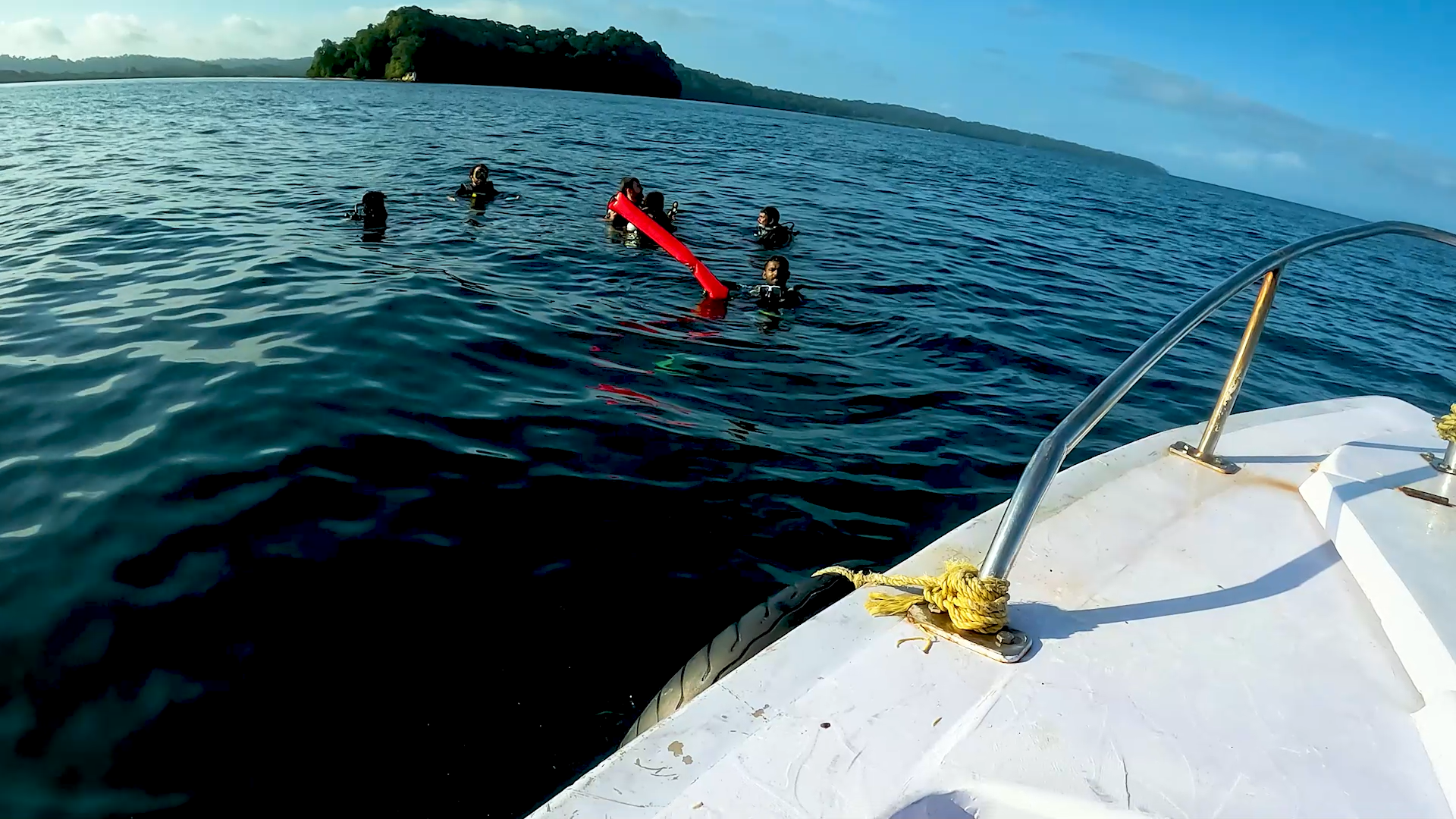
1. PADI Open Water Diver Course
The PADI Open Water Diver Course is your first step into the world of scuba diving. During your training, you will gain an understanding of all your scuba equipment, breathing techniques, buoyancy control, communication and safe diving practices.
To complete this course, you will do some independent study, confined water training and open water training dives. Once you have completed this, you will be awarded your PADI Open Water Diver qualification.
2. PADI Advanced Open Water Diver Course
The PADI Advanced Open Water Diver Course is ideal for someone who has an Open Water Diver certification or similar. You will complete 5 Adventure Dives to gain additional skills. Usually, this course will involve going deeper and navigating underwater.
There are also 3 elective dives depending on how it has been set up. This will help improve your buoyancy, awareness, navigation and knowledge of deeper recreational diving.
3. PADI Emergency First Response (EFR) Course
The PADI Emergency First Response Training gives you the skills to be prepared for emergencies. Being trained in first aid and CPR can be a great skill to have if you participate in any adventure activities and want to boost your confidence to give the right assistance.
The EFR training will also help those wishing to progress to rescue-level training. Please check with Aqua Nomad what will be covered, the practical aspects and what certification is required.
4. PADI Rescue Diver Course
This course will give you more knowledge on potential issues that can occur while diving. It will also increase your awareness of signs of stress. You will also prevent any issues from arising, help other divers, and improve your rescue skills by working with a professional. This is an important step in encouraging responsible behaviours and awareness of others.
Which Scuba Diving Courses Does Aqua Nomad Offer?
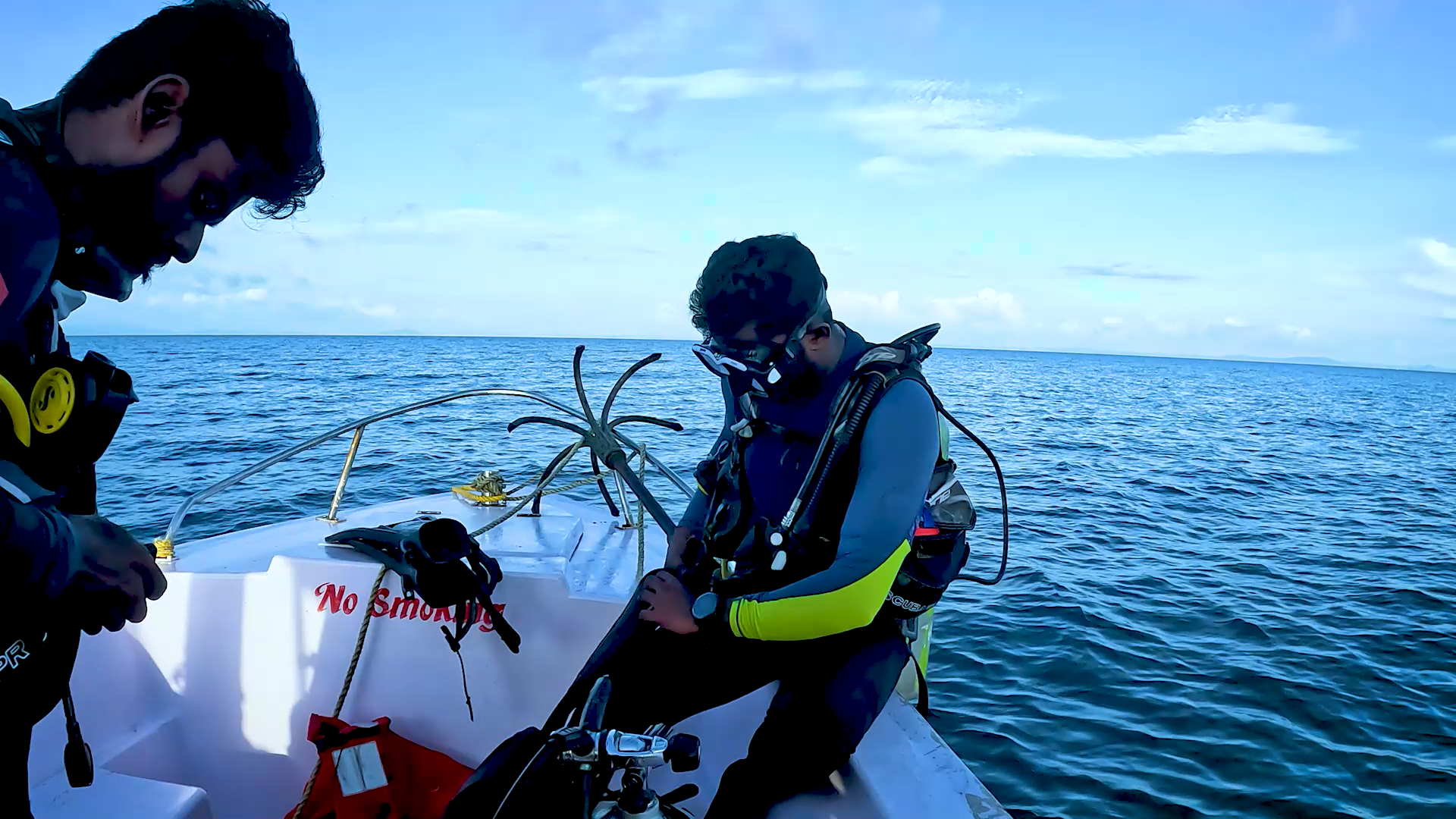
Aqua Nomad offers 4 PADI courses:
Knowing the differences between each one can help you choose the right option for your diving experience.
1. PADI Open Water Diver Course Andaman
The PADI Open Water Diver Course is perfect for beginners wanting to start their scuba diving journey and obtain an entry-level qualification. Students will not need any prior scuba diving experience. You will complete your theory using PADI eLearning before beginning your practical training with a professional instructor. You will complete theory work in the form of class-based learning, swimming and floating tests, as well as confined water training and four open water training dives.
Course highlights:
Certification: PADI Open Water Diver
Training duration: 4 days
Open-water training: 4 dives
Maximum recreational depth: Up to 18 metres, subject to applicable certification and age limits
Minimum age: 10 years
Course fee listed: ₹35,000 per person
GST: Additional 18%
What Will You Learn?
Students will gain a good understanding of scuba equipment, underwater breathing, mask clearing, buoyancy, communicating underwater and safe diving practices. Students will also learn how to plan dives with a buddy and stay within their training.
How the course works:
1. E-learning
Students will first complete some theory work. This will teach them the basics of scuba diving. Topics covered will include important diving theory, equipment, pressure, buoyancy and safety. It is estimated that this theory portion will take between 5 and 10 hours to complete, depending on how quickly you learn.
2. Swimming and Snorkelling Proficiency
Students will show that they are confident in water by completing these assessments. This includes:
Swim 200m without aid or 300m with mask, snorkel and fins. Float or tread water for 10 minutes.
3. Confined Water Training
Prior to completing open-water training, students will complete some essential scuba training in a pool or other confined water environment. This will include putting your kit on, breathing underwater, mask clearing, regulator recovery and buoyancy.
4. 4 Open Water Training Dives
Students will put what they have learnt into practice during these 4 training dives. This will help build your confidence underwater, improve your equipment handling skills and show that you have the required skills.
5. Assessment
Your instructor will assess your theory and practical knowledge. When you have completed all relevant requirements, you will be able to be certified. This is an important programme to give those wanting to get into recreational diving at various locations a good foundation.
2. PADI Advanced Open Water Diver Course Andaman
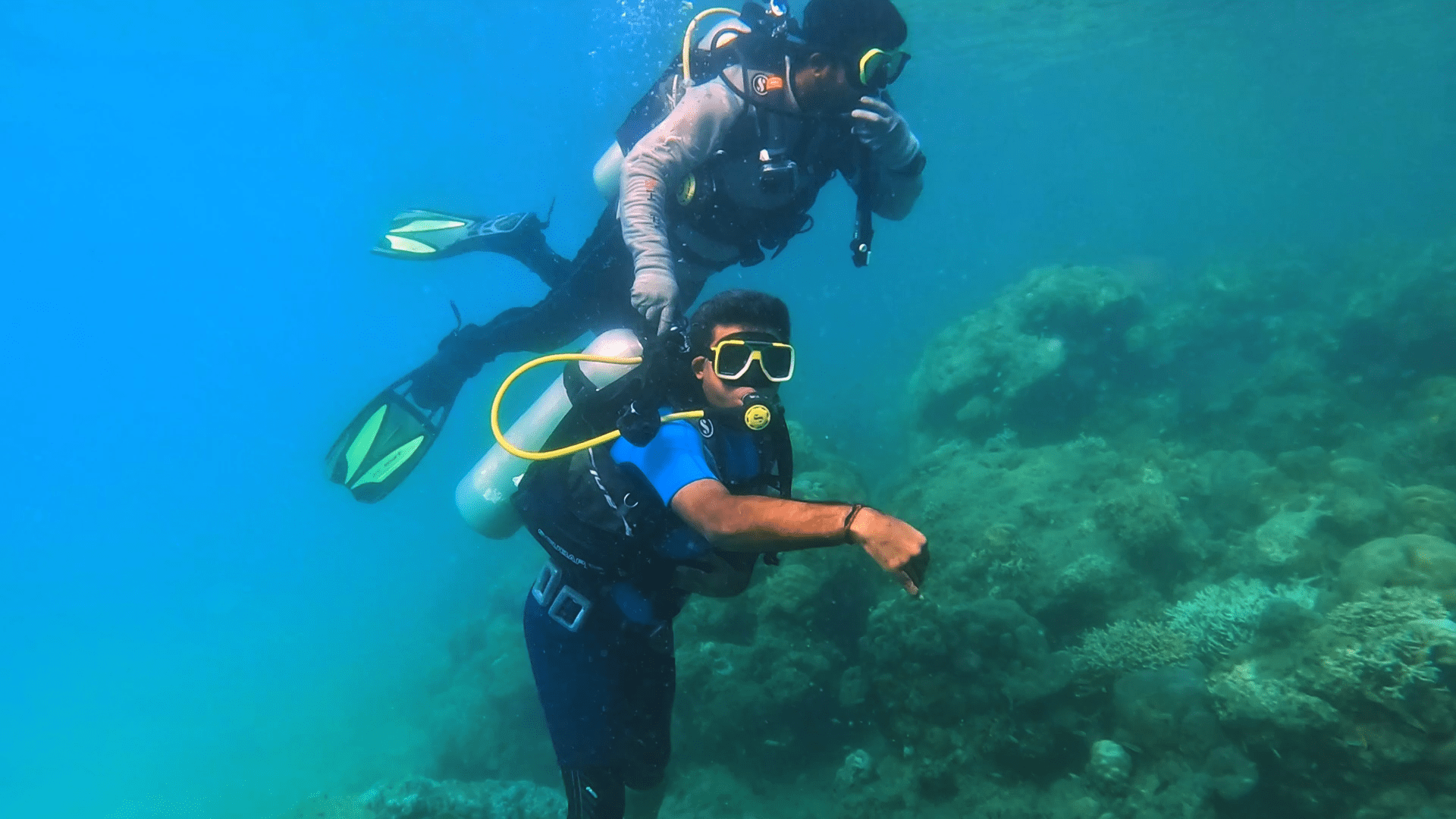
After completing your open water scuba course, you may wish to further improve your diving skills by taking the PADI Advanced Open Water Course. This course is aimed at divers who have already been certified and wish to improve their diving skills and experience different types of recreational diving.
Aqua Nomad lists 5 ‘Adventure Dives’ that are included. Usually includes one deep dive, 1 navigation dive and 3 electives. Elective options will depend on availability and include peak performance buoyancy, fish identification and underwater photography.
Course highlights:
Certification: PADI Advanced Open Water Diver
Training duration: 2–3 days
Open-water training: 5 dives
Listed maximum depth: Up to 30 metres, subject to applicable certification requirements and course standards
Minimum age listed: 12 years
Course fee listed: ₹30,000 per person
GST: Additional 18%
What Will You Learn?
Underwater Navigation : Using a compass and natural points of reference, students will learn how to navigate underwater.
Peak Performance Buoyancy : This will teach you how to maintain good buoyancy and body position underwater. This will reduce excess movement underwater.
Deep Diving : Students will learn about factors affecting depth, gas usage, planning dives and correct safety procedures.
Marine Life Recognition : You will learn how to be observant and identify different marine life without disturbing the environment around you.
Adventure Dives (elective) : Further diving experiences are chosen based on the course planning, your personal interests and local conditions. The course usually lasts between 2-3 days depending on how quickly you learn, availability and sea conditions.
3. PADI Emergency First Response (EFR) Andaman
Emergencies can happen in many situations, such as adventure sports and outdoor activities. Being able to respond correctly to emergencies can make a big difference. PADI Emergency First Response introduces you to Emergency First Response Education.
This course is relevant to people interested in developing basic emergency preparedness and to divers progressing towards rescue-related training.
Course highlights listed by Aqua Nomad:
Course: PADI Emergency First Response
Training duration: 1 day
Listed course fee: ₹15,000 per person
GST: Confirm the applicable final amount with Aqua Nomad.
The detailed course syllabus and specific practical components should be confirmed with the training team before booking. The programme is particularly relevant for people who want to understand the importance of emergency preparedness rather than relying only on their underwater diving abilities.
4. PADI Rescue Diver Course Andaman
This PADI Rescue Diver Course equips divers with the skills needed to identify and assist in situations which could cause problems while diving.
While introductory courses focus on improving individual diving skills, the rescue course focuses more on being aware, preventing issues and assisting others.
The students will learn to identify stress indicators, identify possible issues and know how to react in an emergency situation.
The key points of the course are
Course Name: PADI Rescue Diver
Length of Training: 3 Days
Cost of Course: ₹30,000 per person
GST: Please check with Aqua Nomad to confirm the final cost.
This course will use your existing diving knowledge to give you some more advanced safety-related skills. Before booking onto the course, please ensure you meet all the entry-level requirements, including any certification, EFR, medical and other requirements.
What Equipment Is Used During Scuba Diving Training?
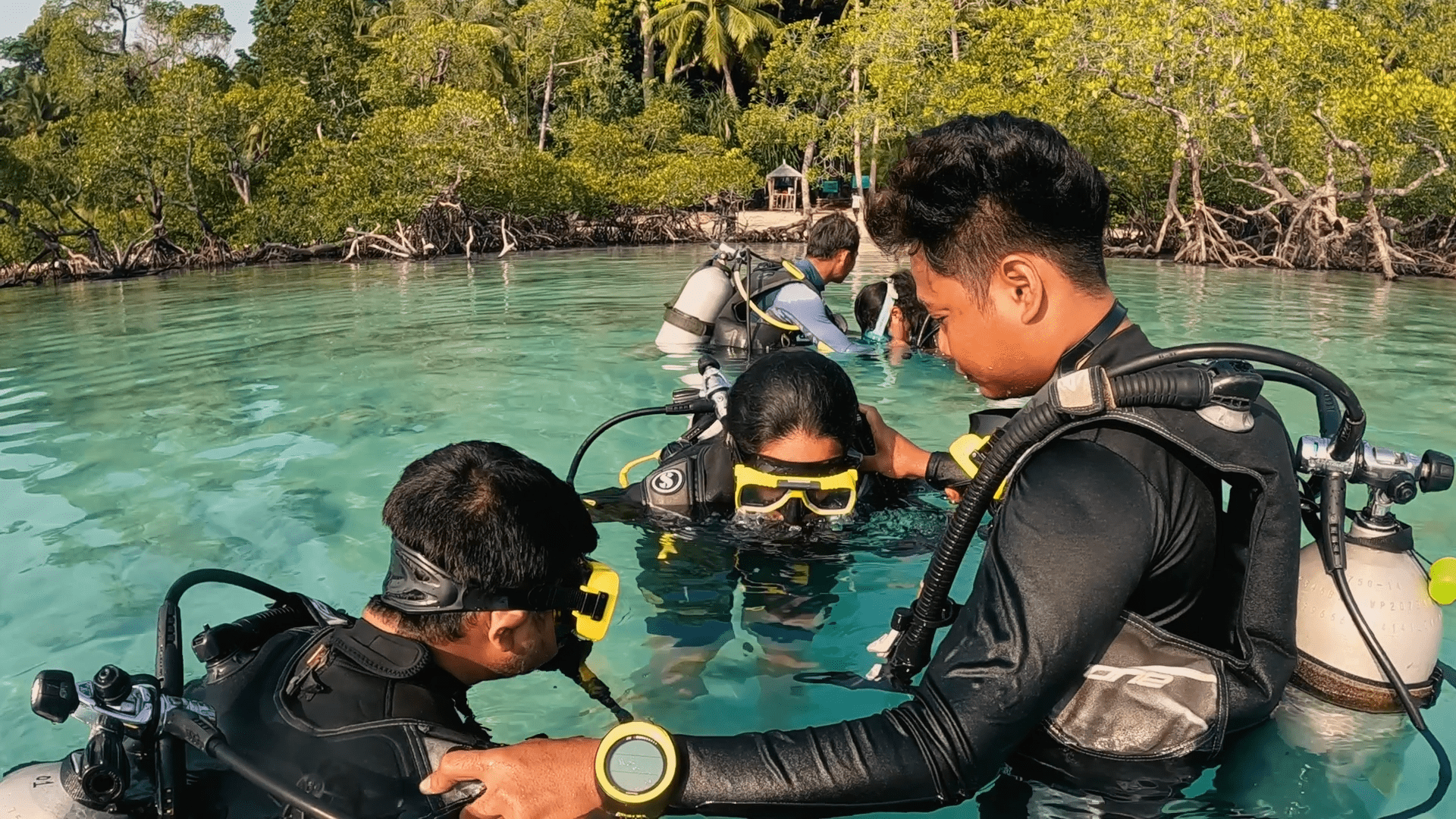
Scuba gear is essential to help you to breathe, swim and see clearly. You will learn how to use each piece of equipment and what it does during your professional diving course.
The Main Equipment Includes:
Scuba Cylinder : This cylinder holds the compressed breathing gas needed for the dive. The gas is supplied to the diver via the regulator.
Regulator : This lowers the pressure of the breathing gas. This means that it can be breathed by the diver. The regulator has a mouthpiece and an exhaust valve.
Buoyancy Control Device : Used to help control a diver’s buoyancy by adding/removing air. This gives the diver a comfortable position and means they won’t come into contact with coral reefs unnecessarily.
Mask : This provides an air pocket in front of the eyes. This helps the diver to see underwater. Your mask must fit correctly.
Fins : Helps a diver to swim in the water more efficiently. Using correct finning techniques can reduce any excess effort.
Wetsuit/Exposure : Depending on the water temperature, how long you are diving for and your own personal requirements, you may want to wear a wetsuit/exposure. This will help you be comfortable and reduce heat loss.
Dive Computer/Gauges : Dive computers and gauges help divers to know key information such as depth, duration of dive and amount of breathing gas left. This helps when planning your dive and helps you to stay aware underwater.
Equipment | Main Purpose |
Scuba Cylinder | Stores compressed breathing gas. |
Regulator | Delivers breathable gas to the diver. |
BCD | Helps manage buoyancy. |
Mask | Provides underwater vision. |
Fins | Support underwater movement. |
Wetsuit | Provides thermal protection. |
Pressure Gauge | Displays remaining cylinder pressure. |
Dive Computer | Helps monitor dive information. |
Weight System | Helps achieve appropriate buoyancy. |
Dive Compass | Supports underwater navigation. |
What Safety Procedures Should You Follow During Scuba Diving?
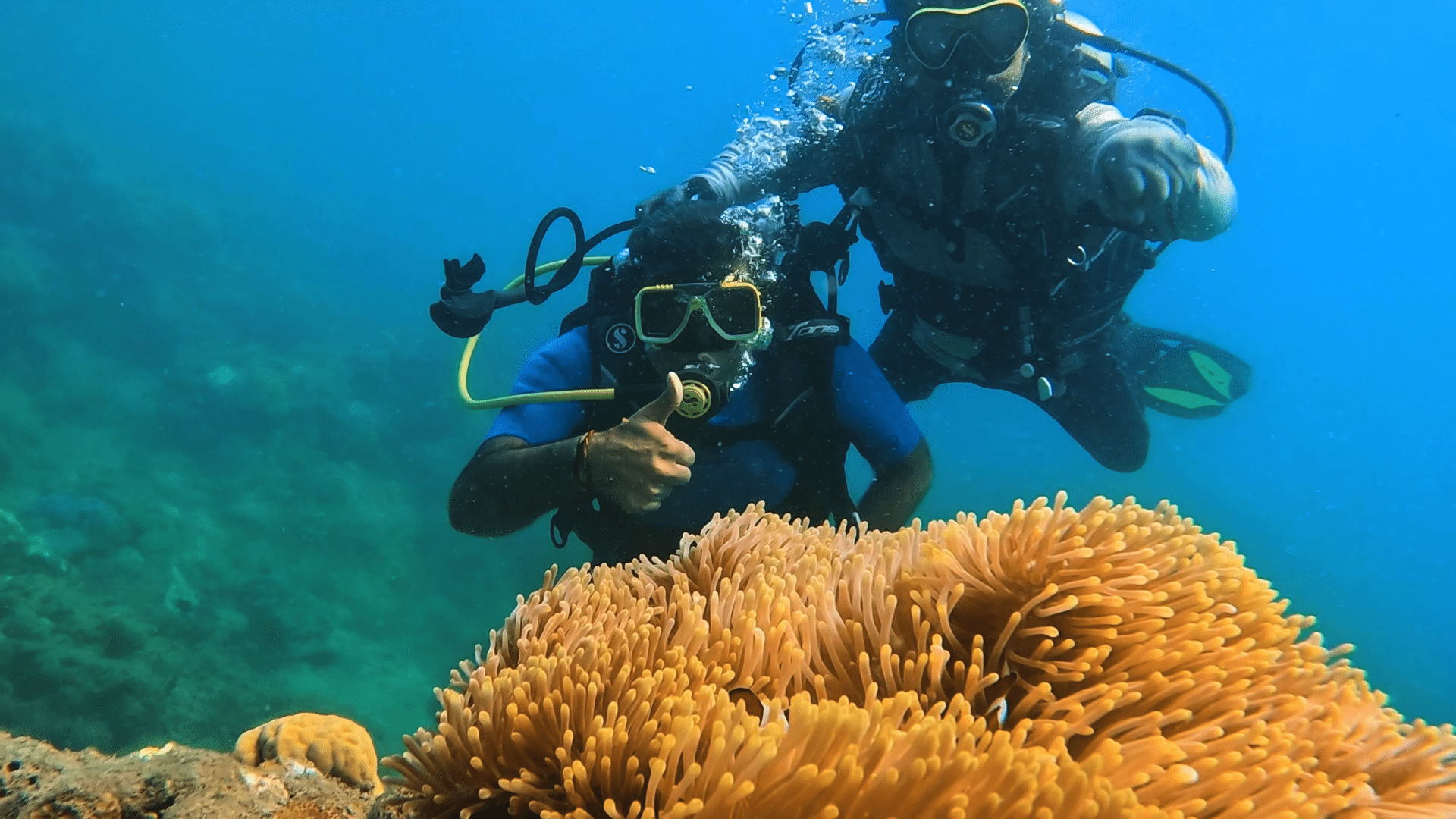
Safety is an important aspect of scuba diving training. Whilst you may be in some beautiful tropical waters whilst diving, you will understand the various pressures underwater, equipment and environments. You will be taught by professional instructors and responsibly prepared.
1) Always listen to your instructor
Listen during your pre-dive briefing and follow your instructor's instructions. Don’t attempt any techniques outside your training.
2) Don’t hold your breath when ascending
You should always breathe normally when ascending. If you were to hold your breath, this can cause damage to your lungs.
3) Equalise your ears
As you go deeper into the water, the pressure increases. Equalising will help to balance the pressure in your middle ear. If you feel any pain or are unable to equalise, stop descending and tell your instructor.
4) Be aware of your air
Always be aware of how much breathing gas you have left. Follow your plan and communicate with your buddy and instructor.
5) Good buoyancy
Having good buoyancy will help keep you stable underwater. This will reduce the chance of accidentally touching coral reefs, marine life and underwater structures.
6) Ascend safely
If you ascend too quickly, it can increase the risk of decompression issues. Ascend at the correct rate and complete a safety stop as taught.
7) Don’t go beyond your certification
Don’t exceed your depth, environment or activity based on your certification and experience. If you are in an advanced environment, you should have the correct specialist training.
8) Don’t dive if you’re unwell
Don’t dive if you are unwell, too tired or have consumed alcohol or recreational drugs. Always be truthful about your medical history.
Common Risks Associated With Scuba Diving
Whilst there are many factors involved, with proper training, planning and correct equipment, scuba diving can be a lot of fun!
Factors to consider:
Barotrauma : Changes in pressure may cause issues with gas-filled spaces such as the ears and sinuses.
Decompression Sickness : Incorrect reduction in pressure can cause bubbles of dissolved gas to form around the tissues and circulatory system.
Pulmonary Overexpansion Injury : The lungs can be damaged due to holding your breath whilst ascending. The gas will expand and will be unable to escape properly.
Ear injury : Incorrect or unsuccessful ear clearing can cause pain and damage to your ears.
Regulator, Cylinder & Equipment : Issues may be encountered with the regulator, cylinder and equipment.
Conditions : Currents, waves, visibility and changing weather can cause issues. However, with proper training, equipment checks, good planning and sensible decisions, you can manage the risk.
Why Choose Aqua Nomad for Scuba Diving Courses in Andaman?
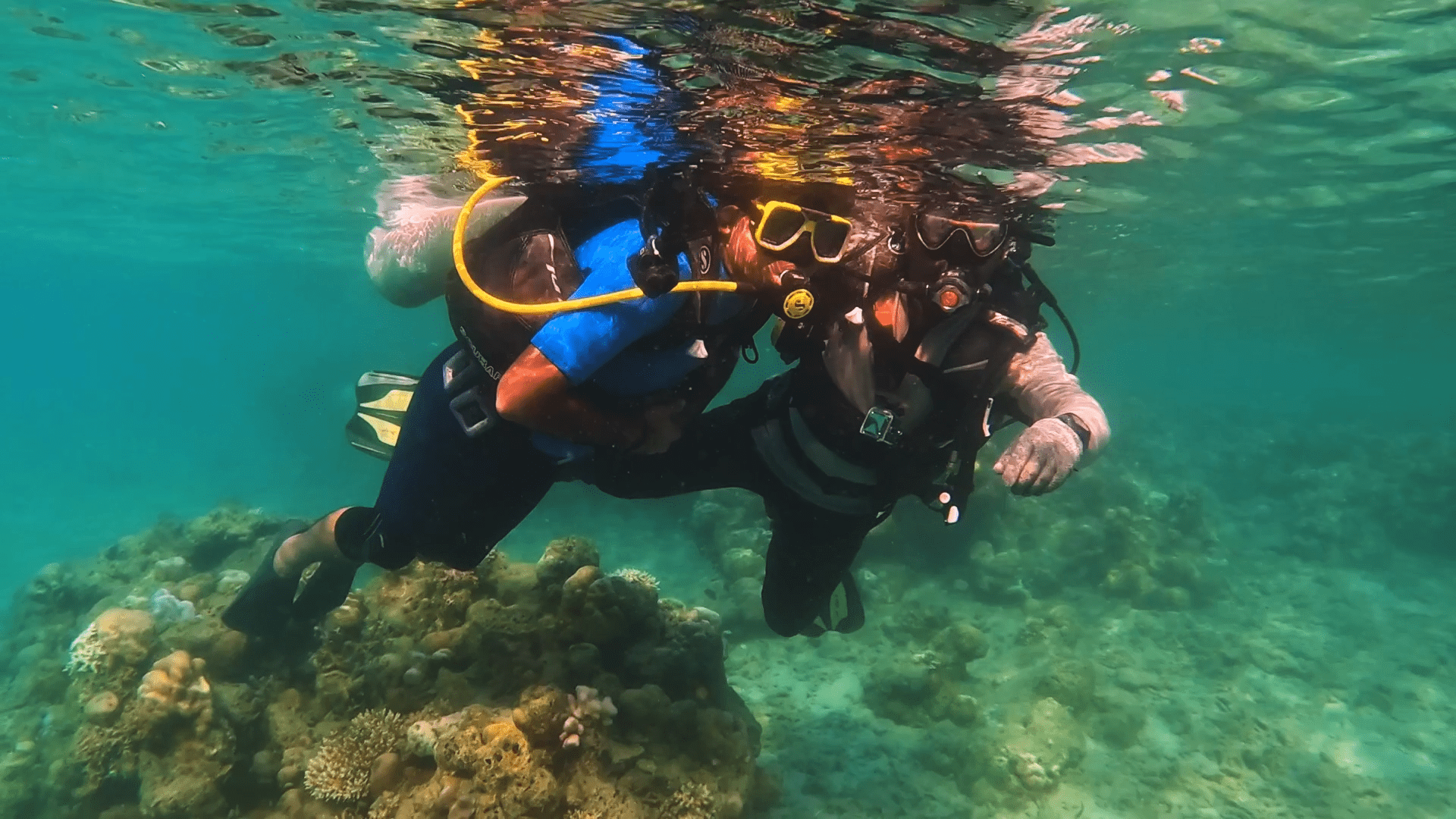
Choosing the appropriate diving center will ensure your success in your diving trip. We provide numerous PADI courses that will equip you with information about what you can expect from diving in the Andaman Islands.
Here are the reasons that demonstrate why you should select Aqua Nomad as your diving center:
1. Variety of PADI Courses
The Aqua Nomad diving center features 4 different types of courses, including Open Water Diver, Advanced Open Water Diver, Emergency First Response, and Rescue Diver.
2. Courses Available for Everyone
The diving courses can be organized for beginners and those who are already instructors.
3. Practical Diving Courses
The aforementioned courses are practical, as they give you plenty of chances to practise swimming.
4. Certification
The Aqua Nomad courses conclude with the certification awarded by PADI.
5. Dive Locations in Andaman
With our diving courses, you will know where diving is possible because we will guide you.
6. Different Number of Training Days
The time spent on the courses differs because it depends on the plan of the course.
How Much Do Scuba Diving Courses Cost in Andaman?
The scuba diving training cost varies according to the selected course, length of the training, certification regulations, services provided, and applicable taxes. The Open Water course price and the Advanced Open Water course price provided above both include 18% GST.
Aqua Nomad's course listing provides the following starting prices:
Scuba Diving Course | Duration | Listed Price Per Person |
PADI Open Water Diver | 4 Days | ₹35,000 + 18% GST |
PADI Advanced Open Water Diver | 2–3 Days | ₹30,000 + 18% GST |
PADI Emergency First Response | 1 Day | ₹15,000 + applicable taxes to be confirmed |
PADI Rescue Diver | 3 Days | ₹30,000 + applicable taxes to be confirmed |
The prices provided above are as per the inclusiveness of 18% GST for both the courses.
Open Water Diver: ₹41,300/person
Advanced Open Water Diver: ₹35,400/person
The prices given above reflect the inclusion of 18% GST in the original cost. Please confirm the final price being paid and payable with Aqua Nomad before you make a booking with them.
Factors That Influence Scuba Diving Course Costs
1. Type of Course: Different training will have various aims.
2. Length of Training: You should know that depending on the type of course, you will be paying different amounts.
3. Equipment and Resources: Depending on what equipment is required for your lectures, e-learning, certification fees, etc., this can massively influence the price of your course.
4. Certification Fee: Ensure that you know what certification fee is included in your course.
5. Extra Costs: Please be aware that travel costs, accommodation costs and other extra costs are not included in your course fee.
What Should You Prepare Before Joining a Scuba Diving Course?
Getting ready for your classes helps you make use of time efficiently and be prepared during the application.
The following particulars can assist you with preparing well for your courses.
Complete Your Theory Before It Is Due : If your course uses PADI eLearning, consider studying ahead of time since you will be busy only with practical work.
Check Your Health : Be sure to go through the diving medical checklist to find out whether you need to get any extra medical permission.
Get Used to Being in Water : It will help you get ready for the practice and abilities test. Ask the diving centre about the swimming requirements beforehand.
Wear Proper Swimming Attire : Use swimming attire that fits well under the diving suit. The instructor will tell you everything about any additional protection you may need.
Get Enough Rest : Good sleeping allows being focused during both classes.
Drink Water : Drink enough water while diving. Don't drink alcohol before diving.
Check Your Reservation : Be particularly clear on the course date, duration, price, GST, what's covered in the price, and what equipment is needed.
Conclusion: Begin Your Underwater Learning Journey With Aqua Nomad
Scuba diving is more than an adventurous holiday activity. It is a skill-based experience that requires knowledge, practical training, responsible decisions, and an understanding of underwater environments. Whether you are a beginner looking to earn your first diving certification or an experienced diver interested in improving your abilities, choosing the right training programme is an important first step.
The PADI Open Water Diver Course introduces the fundamentals of recreational diving, while the Advanced Open Water Diver Course helps eligible certified divers develop additional underwater skills. Emergency First Response and Rescue Diver programmes provide further opportunities to develop emergency preparedness and rescue-related knowledge.
With its range of listed courses and training locations across the Andaman Islands, Aqua Nomad provides different pathways for people interested in learning and progressing in scuba diving. Before selecting a course, review the eligibility requirements, medical declaration, training duration, certification conditions, and total fees. Discuss your experience and learning objectives with the dive team so that you can select an appropriate programme.
Ready to begin your scuba diving journey? Explore the available programmes at Aqua Nomad, discuss your preferred dates, and take the first step towards discovering the underwater world of the Andaman Islands.